


What is PFAS?
Dubbed as the “forever chemicals” and “the next asbestos”, PFAS is a large group of complex synthetic chemicals that has been used in various consumer products since the 1950s. PFAS is broadly used in the manufacturing of water resistant, stain resistant and non-stick goods that are used in a range of applications from Gore-Tex materials and anti-adherent pans to firefighting foams.
Risk Factors
The main risk factors with PFAS are:
- Widespread historical use: PFAS has been widely used in consumer products for more than 50 years and can now be identified in various environmental and food samples.
- Environmental persistence: Due to its very stable chemical structure, PFAS molecules do not degrade in the environment and continue to persist, hence the name “forever chemicals”.
- Health effects: Even though the understanding of the health effects of PFAS is currently incomplete and fragmented, the exposure has been linked to health issues such as low birth weight, thyroid issues, testicular cancer and increase in cholesterol among many other symptoms.
- Bioaccumulation: PFAS molecules cannot be metabolised and hence slowly build up in the body of animals over time, which further increases the potential health risks.
PFAS in the Food Industry
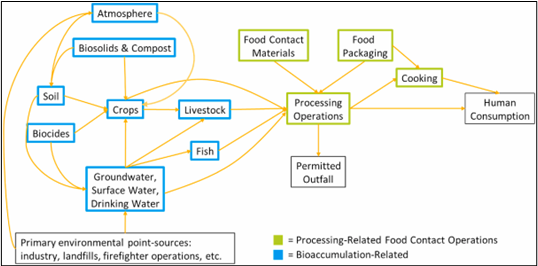
Given the risk factors described the food industry is intimately involved in the way PFAS accumulates in the food chain. This can occur naturally in the environment (bioaccumulation) but importantly the food manufacturing processes can also contribute to this process.
The next asbestos?
Similar to asbestos, the widespread use and persistence of PFAS in our society makes the scale of PFAS exposure and its potential financial impact through litigation quite significant.
PFAS exposure has been linked to several health issues however, the science is far from settled on this matter. Unlike asbestos, where the connection between historical asbestos exposure and the diagnosis of mesothelioma cancer was established and accepted, there is no “signature” disease that is linked to PFAS. Hence the current litigations are full of questions regarding scientific causation and evidentiary standards governing liability.
PFAS Litigation
As always with litigation, the USA is leading the way. The first PFAS related case was brough in 1999 and to date there have been more than 10,000 cases involving more than 500 companies. Known settlements now exceed more than $16 Billion for property damage, environmental damage and health impact claims. The two companies impacted the most are Dupont (manufacturers of Teflon) and 3M (manufacturers of AFFF foam for firefighting).
Food and Beverage Industry Implications
The presence of PFAS has the potential to create a range of issues in the food and beverage industry:
- Liability exposures – claims for environmental damage or health impacts where a direct link can be made between your product if it contains PFAS and your processes can be implicated in the accumulation of PFAS.
- Brand and Reputation – as consumer awareness grows, products found to contain PFAS may face significant drop in sales.
- Supply Chain and Production Challenges – efforts to eliminate PFAS from products are likely to be both costly and challenging to do entirely given how prevalent PFAS is in the environment.
Managing PFAS in your supply chain will be very difficult, particularly where your raw material is agricultural products. However, we encourage manufacturers to review their processes to be confident that they are not contributing the accumulation of PFAS in the way they process, handle or pack their products.
Contact us for more information and enquiries.